
Recycling and Sustainability — Property Clearance London
Property Clearance London is committed to sustainable clearance and reuse across the capital. In every job, whether a maisonette in Hackney or a flat in Richmond, our approach emphasises reuse, recycling and low-carbon operations. We aim to reduce landfill, support local circular-economy projects and align with borough policies on waste separation. This page explains our targets, partnerships with charities, local transfer stations we use and the low-carbon fleet that moves materials around the city.Our core target is clear and measurable: we are working towards a 85% recycling and reuse rate for all property clearances by 2028. That figure covers items diverted to charitable reuse, materials sent to transfer stations for sorting and recycling, and components reclaimed for repair. The 85% objective is ambitious but realistic — it reflects improvements in segregation at source, stronger charity networks and investments in our transport and sorting processes.
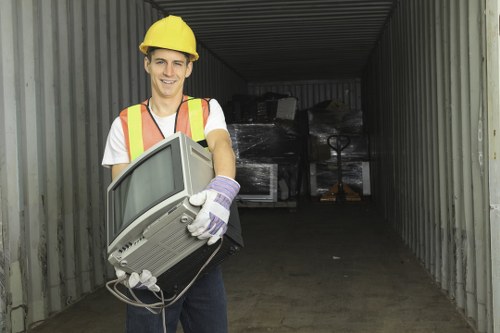
How we manage materials across London
We tailor London property clearance plans to local borough rules. Some boroughs operate a three-stream or four-stream collection system (paper/card, mixed recycling, food waste and residual); others use co-mingled collections with local sorting at transfer stations. Our teams are trained to separate items according to each borough’s approach — from Camden’s emphasis on textiles and small electricals to boroughs that prioritise food and garden waste. This local sensitivity maximises recovery rates and reduces contamination.Local transfer stations and materials handling
We make frequent use of London transfer stations and recycling hubs to ensure fast, legal and effective processing. Typical facilities we work with include municipal transfer stations and reuse centres across north, south, east and west London. These sites receive separated loads of wood, metals, inert materials, plasterboard, WEEE (waste electrical and electronic equipment), textiles and bulky furniture for onward recycling. Using local transfer hubs means fewer long journeys and a smaller carbon footprint for clearance jobs.Items sorted at transfer stations are broken down into streams that local processors can accept: metals to scrap yards, mattresses to specialist recyclers, timber to chippers or reuse outlets, and mixed household recycling to sorting facilities. We also prioritise sending good-quality furniture and household items to charity partners rather than to processing where disassembly would be necessary.
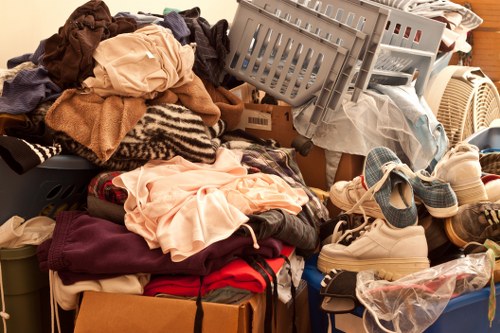 What we recycle and how
Our London clearance services typically recover:
What we recycle and how
Our London clearance services typically recover:
- Bulky furniture for refurbishment or charity reuse
- Wood and timber separated for chipping and re-use
- Metals and white goods to metal recyclers and WEEE processors
- Textiles and clothing to charity textile banks or specialist reprocessors
- Plasterboard and inert materials to licensed recycling yards
Partnerships with charities and community organisations
Strong partnerships amplify our impact. We work with a mix of local community charities and national reuse organisations to give good items a second life. Rather than discarding serviceable furniture, appliances and fabrics, we arrange direct handovers to charity stores, community redistribution projects and social enterprises that refurbish goods for people in need. These collaborations reduce waste, support local social programmes and contribute to our reuse KPI that feeds into the overall Property Clearance London sustainability pledge.Examples of collaboration include collecting working white goods for social housing programmes, donating refurbishment-ready furniture to community centres, and routing small electricals to certified WEEE charities. When charities are unable to accept items, we log and divert them to specialist recyclers, ensuring the highest possible material recovery.
Low-carbon vans and transport choices
Our fleet strategy is a central part of reducing emissions from clearances across London. We operate a mixed low-carbon fleet that includes fully electric vans, plug-in hybrids and the most efficient Euro 6 vehicles for routes that still require longer range. In dense neighbourhoods we deploy smaller electric cargo vans and, where appropriate, cargo-bikes for last-mile transfers to nearby reuse hubs. Reducing mileage and improving load planning are routine: route consolidation, scheduled returns to transfer stations and prioritised drop-offs to charity depots cut fuel use and emissions.Monitoring, reporting and continuous improvement
We monitor diversion rates, mileage and fuel type for every job and produce internal sustainability reports to track progress toward the 85% reuse and recycling goal. Data informs training, investment in kit and decisions about which transfer stations and partners offer the best outcomes. Quarterly reviews also help us adapt to borough-level policy changes and local recycling campaigns. Transparency in reporting ensures accountability for our London property clearance commitments.Commitment to the circular economy: by prioritising repair, reuse and certified recycling we help close material loops in the city. Whether it’s mattress recycling, reuse of fitted kitchen units or responsible disposal of hazardous small quantities, our procedures aim to be legally compliant and environmentally responsible.
Property clearance services across London are evolving: local policies, reuse networks and infrastructure improvements create opportunities to divert more from landfill. Our focus remains on practical, measurable results — pairing an 85% diversion ambition with strong charity partnerships, local transfer station use and a low-carbon fleet to deliver greener, fairer clearances across the capital.